BREAKING: Eagles QB Jalen Hurts Tests Positive for Genetic Clotting Condition Amidst Season-Ending Medical Crisis
PHILADELPHIA, PA — In a sobering update to one of the most frightening medical situations in recent NFL history, Philadelphia Eagles head coach Nick Sirianni announced today that star quarterback Jalen Hurts has tested positive for an underlying genetic blood clotting mutation. The revelation, delivered during an emotional and heavily attended press conference at the NovaCare Complex, provides a critical missing puzzle piece regarding the sudden and severe deep vein thrombosis and pulmonary emboli that have derailed Hurts’s career and abruptly ended his 2026 season.
Sirianni, looking visibly exhausted and carrying the heavy emotional toll of the past week, stepped to the podium to clarify the latest developments in his franchise quarterback’s health saga.
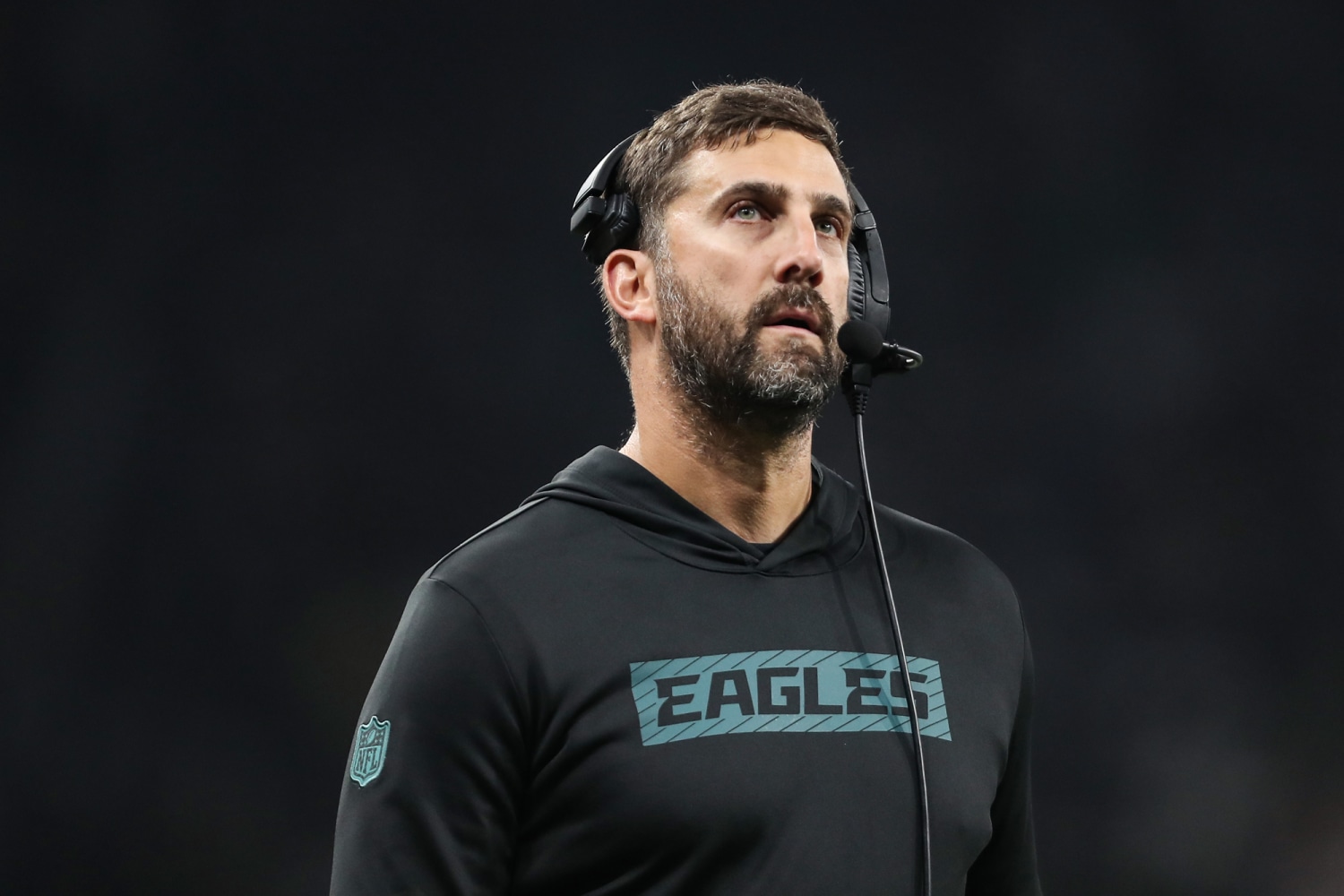
“Over the last few days, Jalen has undergone an extensive battery of hematological screenings to understand exactly how this situation escalated so quickly,” Sirianni stated, the usual fiery energy of the head coach replaced by a grim, measured tone. “This morning, we received confirmation from his medical team that Jalen has tested positive for a specific genetic marker that predisposes him to blood clots. When combined with the physical trauma of a lower-leg injury and the stress of international travel, it created a perfect storm. The priority right now is not football. It is Jalen’s long-term health and his life.”
The Anatomy of a Medical Emergency
To understand the gravity of today’s announcement, one must trace the harrowing timeline that led the Philadelphia Eagles to this unprecedented crossroads. The crisis originated on October 4th, during a brutal, physical matchup against the Los Angeles Rams, when Hurts took a sharp cleat directly to his left calf. What initially appeared to be a standard contusion—a routine occupational hazard in the NFL—was quietly festering into something far more insidious.
Hurts, known for his legendary pain tolerance and stoic demeanor, continued to practice and travel with the team as they headed across the Atlantic for their October 11th international showcase against the Jacksonville Jaguars in London. It was in the United Kingdom that the initial alarm bells rang. Specialists in London diagnosed Hurts with a superficial vein thrombosis in his injured calf. However, in a decision that is now the subject of intense national scrutiny, Hurts was medically cleared to board the team’s transatlantic flight back to Philadelphia.

Upon returning to the United States, Hurts began experiencing shortness of breath and severe chest discomfort. Immediate follow-up scans at a Philadelphia hospital revealed every team doctor’s worst nightmare: the clot had migrated and splintered, resulting in bilateral pulmonary emboli—multiple blood clots lodged directly in his lungs.
Today’s positive test for a genetic clotting disorder explains why the initial superficial clot behaved so aggressively. While the athletic department has declined to name the specific mutation—such as Factor V Leiden or the Prothrombin gene mutation—out of respect for Hurts’s medical privacy, experts note that athletes with these genetic markers are at an exponentially higher risk for severe thromboembolic events following acute physical trauma.
The Immediate Fallout and Treatment
The medical protocol for bilateral pulmonary emboli is absolute and non-negotiable. Jalen Hurts has been placed on a strict regimen of blood thinners, a treatment plan expected to last a minimum of three to six months. Due to the catastrophic risk of internal bleeding, players absolutely cannot participate in any contact sports while on anticoagulation therapy. Consequently, Hurts has been officially placed on season-ending Injured Reserve.
While the immediate, life-threatening crisis has been stabilized and Hurts is reportedly resting comfortably—even remaining active around the team facility in a limited capacity—the positive test for a genetic condition raises complex questions about his long-term NFL future.
Sports medicine experts suggest that while many elite athletes successfully return from isolated blood clots, a confirmed genetic predisposition drastically alters the calculus. To prevent future, potentially fatal clots, Hurts will likely need to adopt lifelong preventative measures. Whether he will require permanent, low-dose anticoagulants—which could severely complicate his ability to ever take another snap under center—will be determined by a team of specialized hematologists over the coming months.
The NFLPA Investigation and Institutional Scrutiny
The revelation of the genetic factor does little to quell the growing storm surrounding the Eagles’ medical handling of the situation. Over the weekend, the NFL Players Association (NFLPA), working in conjunction with the league office, formally launched a comprehensive investigation into the medical care provided to Hurts.
The central point of contention lies in the decision to allow Hurts to endure a grueling, eight-hour transatlantic flight with a known superficial clot. Prolonged immobility at high altitudes is a universally recognized trigger for deep vein thrombosis, and medical experts across the country have publicly questioned the risk assessment that permitted him to board the plane.
Sirianni addressed the mounting criticism directly during his presser. “I lean on our medical experts in every single situation,” the coach said defensively. “I’m a football coach. I have full trust and full faith in our doctors. It’s not just me that has major care for our players; it’s them, as well. We are fully cooperating with the NFLPA’s review, but our collective focus right now is entirely on supporting Jalen.”
A Franchise Forced to Pivot
On the field, the ramifications of Hurts’s absence are catastrophic for a Philadelphia team that entered the 2026 season with legitimate Super Bowl aspirations. Hurts, who led the Eagles to a Super Bowl LIX championship and secured MVP honors just over a year ago, is the undisputed heartbeat of the locker room.
The monumental task of keeping the Eagles’ season afloat now falls to backup quarterback Tanner McKee. While McKee has shown flashes of immense potential and a strong command of Kellen Moore’s offensive scheme, stepping in to replace a franchise icon amidst a mid-season playoff push is an entirely different crucible.
The Eagles’ offensive identity, heavily reliant on Hurts’s dual-threat capability and his unparalleled strength in the quarterback run game, must be drastically rewritten overnight. Defenses across the NFC East are already recalibrating, preparing to aggressively pressure the young backup and force him to beat them strictly from the pocket.
“I haven’t been without Jalen for an extended period of time,” Sirianni admitted, his voice softening as he looked out at the reporters. “Jalen and I have been together, head coach and quarterback, for six years. I have the utmost confidence in Tanner, and the locker room believes in him. But I miss Jalen out there. We all do.”
A Somber Reality Check
As the autumn chill sets in over the Delaware Valley, a profound sense of perspective has washed over the normally rabid Philadelphia sports landscape. The frantic debates over play-calling, divisional standings, and playoff seeding have been abruptly silenced by a stark reminder of the fragile humanity beneath the armor.
Jalen Hurts is no longer fighting for extra yardage on a critical third down; he is navigating a frightening, life-altering medical reality. The positive test for a genetic clotting condition ensures that his road to recovery will be meticulous, complex, and closely monitored. For now, the Philadelphia Eagles must march forward without their captain, desperately hoping to keep their season alive while their leader tackles the most important battle of his life on the sidelines.


