The New England Patriots have given football fans another reason to examine their rebuilding strategy after making an unexpected move during the 2026 NFL Draft, raising fresh questions about the organization’s long-term ambitions and its willingness to act aggressively when a coveted young prospect becomes available.
The decision centered on offensive tackle Caleb Lomu, a Utah standout whom New England selected with the 28th overall pick after trading up three spots, a move that revealed just how strongly the organization believed the talented lineman could contribute to its future. <Cite refs={[“turn942765search0″,”turn942765search1”]}/>
For a franchise attempting to establish a new era of sustained competitiveness, that decision carried significance beyond adding another name to the roster, because it demonstrated that the Patriots were prepared to make a calculated investment rather than simply wait for the draft board to deliver a convenient option.
The Unexpected Decision That Caught Attention
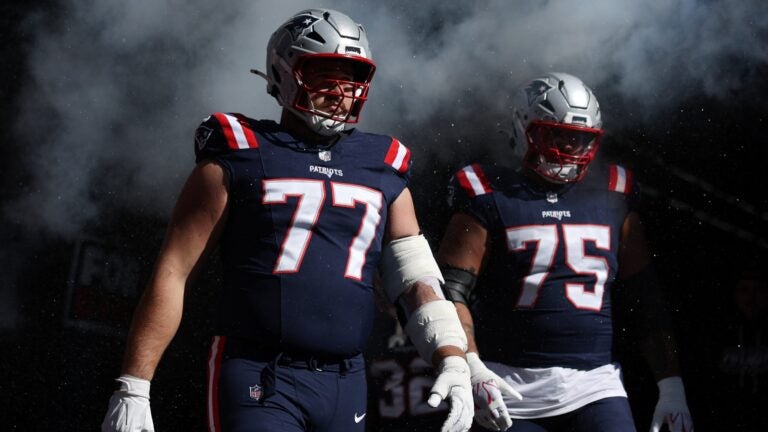
New England originally held the 31st overall selection, but the front office ultimately exchanged that pick and another draft selection to move ahead and secure Lomu, making a deliberate decision that immediately invited questions about the player’s potential and the urgency surrounding the offensive line. <Cite refs={[“turn942765search1”]}/>
The move was particularly interesting because Patriots personnel executive Eliot Wolf acknowledged that the organization had not expected Lomu to remain available at that stage, explaining that the team had previously canceled a planned visit because it anticipated that other clubs would select him earlier.
That revelation created an intriguing contrast between the Patriots’ initial expectations and their eventual decision, because a player they believed might be out of reach suddenly became an opportunity they were unwilling to let pass without taking action.
For supporters, the aggressive approach offered an encouraging sign that New England was willing to prioritize a player it genuinely valued, even when doing so required additional draft capital and a willingness to depart from its original selection plan.
However, a bold draft-night decision is not the same as a guaranteed success, and the true value of the move will ultimately depend on whether Lomu can translate his college experience, athletic ability, and technical development into consistent performances against professional defensive fronts.
Why Caleb Lomu Became Such an Important Target
Lomu arrived from Utah with experience at left tackle, while the Patriots viewed his athleticism and versatility as qualities that could allow him to compete for opportunities on the right side and potentially contribute at multiple positions along the offensive line. <Cite refs={[“turn942765search0″,”turn942765search1”]}/>
That flexibility matters because offensive line depth can determine whether a promising offense maintains its rhythm throughout a demanding season, particularly when injuries, difficult defensive matchups, and adjustments to unfamiliar blocking schemes test the resilience of the starting unit.
New England had already invested in improving its offensive line, but the position group still presented questions that required careful attention, making Lomu an appealing addition for a franchise seeking both immediate competition and longer-term stability.
The organization’s decision also reflected a broader challenge facing teams that want to develop young quarterbacks and establish a reliable offensive identity, because even exceptional skill-position talent can struggle when protection breaks down and the offense cannot consistently execute its intended game plan.
That does not mean Lomu will immediately become a starter or that his selection guarantees a dramatic transformation, since adapting to professional speed, strength, and coaching demands can take time even for talented prospects with substantial college experience.
Instead, the Patriots appear to have identified a player whose physical tools and potential versatility justified an aggressive investment, leaving his eventual role to be determined by development, competition, and performance rather than the excitement surrounding his arrival.
The Five-Star Question and the Pressure to Deliver
The phrase “five-star prospect” carries enormous weight in football discussions because it evokes elite recruiting rankings, extraordinary expectations, and the possibility that a young player could become a major star before his professional career has even begun.
However, Lomu’s confirmed story is an NFL Draft selection rather than a newly announced college recruiting commitment, and the available reporting does not establish that he made the kind of unexpected change of direction described in the original claim.
That distinction matters because the most compelling sports stories do not need an unverified twist to generate attention, particularly when the real decision already presents a meaningful debate about player evaluation, draft strategy, roster construction, and the pressure on a rebuilding franchise to get important decisions right.
Some Patriots fans may view the trade as evidence of conviction from a front office determined to secure a player it believed could make a difference, while others may reasonably question whether surrendering additional draft capital was necessary to obtain an offensive lineman who still needs to prove himself professionally.
Both perspectives can coexist until Lomu begins building a record of NFL performances, because the value of a draft-day investment cannot be measured solely by the excitement of the announcement or the confidence expressed by the executives who made the decision.
A Defining Opportunity for New England
The Patriots now have an opportunity to turn their confidence in Lomu into tangible improvement, with his development potentially influencing the depth, flexibility, and long-term stability of a unit that will face significant challenges throughout the professional season.
If he develops into a dependable contributor, New England’s decision to move up could eventually be remembered as a smart investment that secured a promising offensive lineman before another team had the opportunity to select him.
If his transition proves more difficult, however, the trade will inevitably invite closer examination, particularly because the organization chose to spend additional resources rather than trust that its preferred prospect would remain available at its original draft position.
For now, the confirmed story is already compelling: the Patriots identified a player they wanted, changed their draft position to acquire him, and made clear that they believed his potential justified an aggressive decision.
The biggest question is no longer whether New England was willing to make a surprise move, but whether Caleb Lomu can turn that vote of confidence into the kind of performance that proves the Patriots were right to take the risk.


