A claim circulating online has put Pittsburgh Steelers quarterback Aaron Rodgers back in the spotlight, suggesting that the veteran quarterback received recognition among TIME’s 100 Most Influential People in Sports and delivered an emotional 12-word message that supposedly struck a powerful chord with Steelers fans.
The story has all the ingredients of a headline-grabbing moment, combining a legendary quarterback, a passionate fan base, and a message that promises to reveal something deeper than football, but the central award claim remains unverified by the available official reporting.
TIME introduced its inaugural TIME100 Sports list in June 2026, creating a new platform to recognize athletes, coaches, executives, advocates, media figures, and other people whose influence extends beyond competition and into the wider sporting world.
The official announcement highlighted internationally recognized names, including LeBron James, Lionel Messi, Cristiano Ronaldo, Stephen Curry, Shohei Ohtani, Caitlin Clark, and several influential figures from across the sports industry, but the available published information does not establish Rodgers as one of the honorees.
That distinction matters because recognition from a publication with TIME’s global reach can carry significance beyond a player’s statistics, offering a broader statement about cultural impact, leadership, and the role an athlete occupies in conversations that extend far beyond the field.
For Rodgers, whose career has generated intense discussion among football fans for years, any confirmed recognition of that kind would inevitably invite debate about how his influence should be measured, especially when his public profile has often extended well beyond the ordinary boundaries of a quarterback’s responsibilities.
His football legacy, public statements, and unconventional approach to life have made him a figure who attracts both passionate support and persistent criticism, ensuring that any major announcement involving his name can quickly become a conversation about much more than passing yards or victories.
In Pittsburgh, the connection between a quarterback and the fan base carries its own weight, because Steelers supporters have long valued toughness, accountability, and the expectation that players understand what wearing the black and gold means to generations of loyal fans.
That relationship is particularly important whenever a high-profile veteran arrives with an established reputation, since supporters want to know not only what he can deliver on the field but also whether his leadership and priorities align with the standards associated with the franchise.
The supposed 12-word message described in the circulating claim has become its most emotionally appealing element, promising a short statement that could supposedly capture Rodgers’ appreciation for the people supporting him, but no reliable source has established the exact wording or confirmed that he delivered it.
Without an authenticated interview, a verified social media post, or a direct statement from Rodgers or the team, publishing a quotation as though it were genuine would risk misleading readers and unfairly attributing words to a real person.
That does not make the broader question uninteresting, because the bond between a quarterback and a fan base is often built through small moments of honesty, public accountability, and recognition of the people who remain invested through both triumph and disappointment.
For Steelers supporters, a meaningful message from their quarterback would not need to be dramatic or carefully crafted to become memorable, since sincerity often carries more weight than a polished statement designed to generate attention across social media.
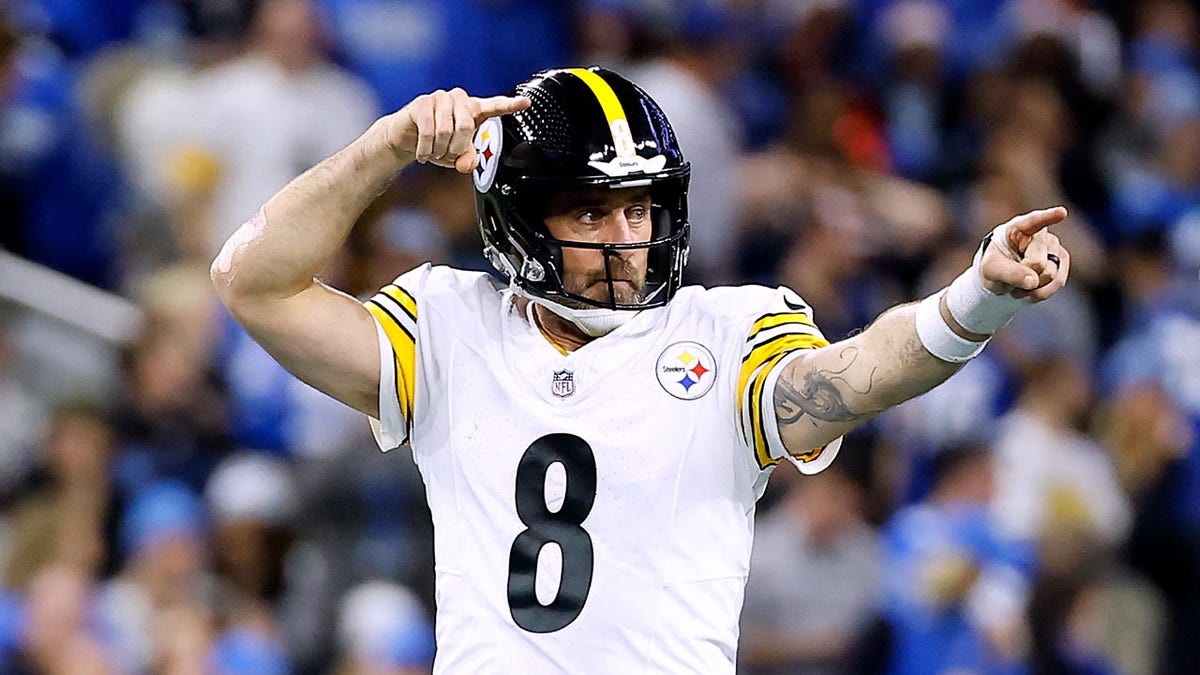
The larger discussion surrounding TIME100 Sports also raises a worthwhile question about influence itself, because athletic achievement is only one part of the equation when public figures shape conversations, inspire younger athletes, and affect how fans understand the relationship between sports and society.
TIME’s inaugural list was designed to recognize that broader landscape, bringing together people whose impact reaches into business, media, leadership, and culture rather than limiting the selection to players with the strongest statistics or the most decorated careers.
Until a credible source confirms Rodgers’ inclusion and publishes the alleged message, however, the award claim should be treated cautiously rather than repeated as breaking news, particularly when a compelling headline can spread much faster than the evidence needed to support it.
For now, the most defensible story is not a confirmed TIME honor or a verified emotional declaration, but the continuing fascination surrounding Aaron Rodgers, the expectations attached to his role in Pittsburgh, and the powerful connection that Steelers fans hope to see from the leader under center.


