Tom Brady has become the center of a growing conversation surrounding Drake Maye after a powerful statement attributed to the legendary quarterback challenged the criticism directed at New England’s young star, raising uncomfortable questions about loyalty, accountability, and whether the expectations placed on the Patriots’ emerging leader have become increasingly difficult to satisfy.
“What is happening to him is a crime against football—a blatant betrayal of everything this sport stands for,” Brady reportedly declared in the circulating statement, delivering a forceful message that shifts attention away from individual statistics and toward the enormous pressure facing a quarterback expected to help restore New England to its former prominence.
The quotation has not been independently verified, but its underlying message touches a sensitive issue among Patriots supporters, many of whom are eager to see their franchise return to championship contention while navigating the challenges that inevitably accompany a changing roster, new expectations, and the development of a young quarterback.
For Maye, the challenge of leading New England involves far more than delivering accurate passes or producing impressive numbers, because every performance is examined through the history of a franchise that spent years establishing one of the most successful periods professional football has ever witnessed.
That history creates a complicated environment for any quarterback following Brady, whose accomplishments helped establish standards that remain deeply embedded in the expectations of Patriots fans, even as the personnel, coaching circumstances, and competitive landscape continue to change.
The pressure becomes especially intense when a young player is viewed as the potential answer to years of uncertainty, because supporters can begin expecting immediate transformation before the team has fully developed the consistency and supporting structure necessary to sustain success.
The statement attributed to Brady directly challenges the harshest forms of that scrutiny, arguing that criticism can become unfair when it ignores a player’s effort, commitment, and willingness to accept responsibility while attempting to carry an offense through difficult circumstances.
“How could anyone be so cruel?” the reported message asks, expressing frustration with the idea that a quarterback who continues competing under pressure should be judged without consideration for the challenges surrounding him.
That question strikes at the heart of a familiar disagreement in professional football, where one group believes elite players must be held accountable for every disappointing performance while another insists that meaningful evaluation requires understanding the circumstances behind the results.
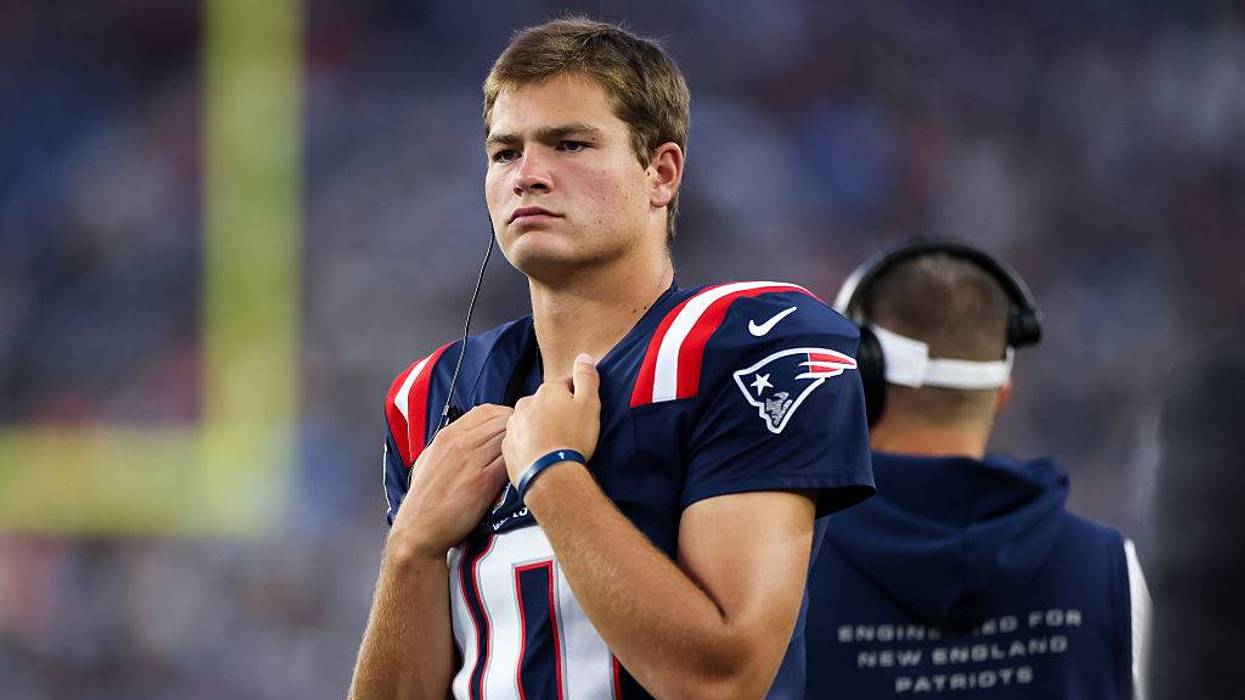
Maye occupies a particularly difficult position because the expectations surrounding him are shaped not only by his own potential, but also by the memories of a championship era that established an exceptionally high standard for quarterbacks wearing a Patriots uniform.
Brady’s legacy makes those comparisons almost unavoidable, yet comparing a developing quarterback with one of the most accomplished players in NFL history can create expectations that are difficult to reconcile with the time required to build experience, chemistry, and consistency.
The most important question is not whether Maye should be protected from criticism, because every quarterback must face honest evaluation, but whether those evaluations recognize the difference between individual mistakes and problems that involve the offense as a whole.
Football remains a team sport, and a quarterback’s performance can be influenced by pass protection, receiver execution, play-calling, defensive pressure, and the overall rhythm of an offense, meaning that the final result rarely tells the complete story of what happened during a game.
A difficult performance can therefore reveal genuine areas for improvement without automatically proving that a young quarterback lacks the ability to become a dependable leader, especially when his development is still unfolding under the scrutiny of a demanding professional environment.
The defense attributed to Brady emphasizes that distinction, presenting Maye as a player who deserves to be evaluated through the broader context of his commitment rather than being reduced to the outcome of a single afternoon.
The circulating statement continues by praising the quarterback’s willingness to compete, describing a player who reportedly gives everything to the offense without constantly seeking attention or publicly blaming teammates whenever circumstances become difficult.
“He has carried this offense with his whole heart, showing up week after week, playing through pain, giving everything he has—all without ever seeking the spotlight or casting blame on anyone else—simply fighting with everything he’s got for New England,” the statement reads.
Those words offer an emotionally compelling picture of leadership, but the quotation should not be treated as an authentic statement from Brady unless a reliable source confirms that he actually made those remarks.
Even so, the broader discussion raises a legitimate question about what Patriots supporters expect from their young quarterback during a period when the franchise is attempting to establish a new identity and build toward sustained competitiveness.
Some fans may argue that patience is essential because developing a successful offense requires more than individual talent, while others may insist that professional football offers limited opportunities and that players must demonstrate improvement rather than rely on promises about future potential.
Both perspectives reflect the tension inherent in rebuilding expectations, particularly for a franchise whose supporters became accustomed to competing for championships and measuring seasons against extraordinary historical achievements.
The challenge for New England is finding a balance between demanding accountability and allowing players enough room to develop, because excessive patience can overlook genuine problems while unrealistic expectations can make every setback appear more damaging than it actually is.
For Maye, the most persuasive response to outside debate will ultimately come through his performances, his decision-making, and his ability to help the Patriots establish a more consistent offensive identity over time.
For supporters, the challenge is deciding whether they can evaluate the team’s progress without allowing memories of the past to determine every judgment about the present.
Brady’s name makes the conversation particularly powerful because his career represents the standard that many Patriots fans still associate with success, but his achievements should not automatically become the minimum requirement for every quarterback who follows him.
A new era requires its own measurements of progress, including improved execution, stronger communication, better decision-making, and the ability to respond constructively when difficult games expose weaknesses that still need attention.
The controversy surrounding the reported statement also demonstrates how quickly an emotionally charged quotation can spread through sports communities, especially when it connects a legendary figure with a young player whose future matters deeply to an established fan base.
That is why verifying the original source remains essential, even when the message itself encourages a constructive discussion about fairness, pressure, and the responsibilities that come with playing quarterback for New England.
Ultimately, the central question extends beyond Brady and Maye: should a young quarterback be judged primarily by the results he produces today, or should supporters also consider the development, resilience, and circumstances that will shape his future?
There may never be a universally accepted answer, because passionate football fans will always disagree about how much patience a struggling team deserves and how quickly a promising player must deliver results.
But one principle should remain clear: accountability and support do not have to be opposites, and a player can be challenged to improve without having his entire value reduced to one disappointing performance.
If the words attributed to Brady are ever verified, their significance will depend not simply on the intensity of the quotation, but on the discussion they inspire about the future of the Patriots and the standards applied to their next generation of leaders.
For now, the debate surrounding Drake Maye serves as a reminder that following a legendary quarterback is not merely a football challenge, but an emotional test for a fan base still learning how to measure success in a new era.


