GEORGE PICKENS’ REACTION TURNS HEADS AFTER LOUISIANA JUDGE DEALS NCAA A STUNNING BLOW — IS COLLEGE FOOTBALL BECOMING THE NFL’S REVOLVING DOOR?
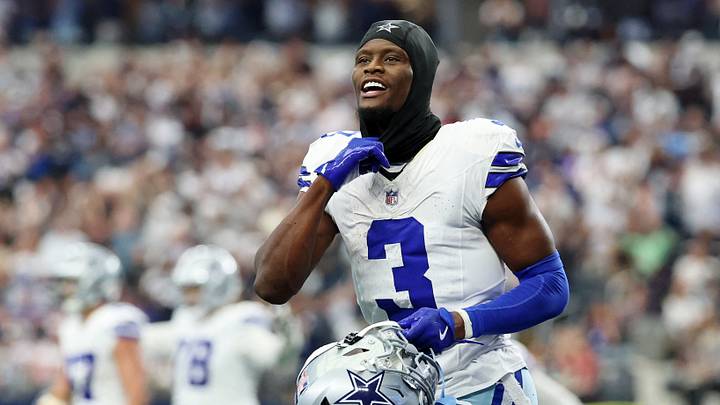
George Pickens has built an NFL reputation on spectacular catches, visible emotion and a personality that rarely disappears quietly into the background.
So perhaps it was inevitable that his name would become attached to one of the strangest football debates America has seen in years.
A Louisiana judge has delivered a significant preliminary victory to athletes challenging NCAA eligibility restrictions, potentially clearing a route for players who already spent time inside NFL organizations to return to college football.
Read that sentence again.
NFL players.
Going back to college.
Not as coaches.
Not as graduate assistants.
As players.
If college football’s rulebook feels increasingly like something written on an Etch A Sketch during an earthquake, this latest development probably will not restore anyone’s confidence.
The ruling from East Baton Rouge Parish Judge William Jorden granted a preliminary injunction in litigation involving athletes seeking additional college eligibility, including Dae’Quan Wright and Zxavian Harris, two players who previously spent time with NFL organizations and are seeking to join LSU.
The ruling remains preliminary.
The lawsuits are far from finished.
The Southeastern Conference is fighting back.
The NCAA has not suddenly announced a nationwide “NFL-to-college transfer portal.”
But the door that once appeared welded shut has undeniably moved.
And that is why the controversy should fascinate someone like Pickens.
Because George Pickens did exactly what football players were historically expected to do.
He played college football.
He entered the NFL Draft.
He became a professional.
End of college story.
Or at least that was how the story used to work.
PICKENS KNOWS WHAT THE ONE-WAY DOOR LOOKS LIKE
Pickens spent three seasons at Georgia from 2019 through 2021, appearing in 26 games and recording 90 catches for 1,347 yards and 14 touchdowns.
He missed much of his final college season after suffering a knee injury before returning late in Georgia’s national championship campaign.
Then came the NFL.

The Pittsburgh Steelers selected him with the No. 52 overall pick in the second round of the 2022 NFL Draft.
There was no “maybe I’ll come back to Georgia next spring.”
There was no reset button.
No convenient return policy.
Pickens became an NFL player.
That was supposed to mean something permanent.
Four seasons later, after eventually moving from Pittsburgh to Dallas, Pickens produced a monster 2025 season for the Cowboys: 93 receptions, 1,429 yards and nine touchdowns. NFL records currently list him as an active Dallas receiver.
He has successfully traveled the traditional road.
College star.
Draft pick.
NFL starter.
Professional football.
Now imagine watching a court case suggesting that another player could potentially drive that road in reverse.
No wonder the issue is attracting attention.
WAIT — YOU CAN COME BACK NOW?
For generations, professional status functioned as one of college sports’ clearest red lines.
You crossed it.
You were done.
Simple.
Beautiful.
Almost suspiciously understandable by NCAA standards.
Then modern college athletics arrived.
NIL compensation expanded.
Transfer restrictions collapsed.
Revenue sharing entered the conversation.
Eligibility policies evolved.
Court decisions repeatedly challenged the NCAA’s authority.
And suddenly “simple” became another nostalgic word from the era when coaches actually pretended the transfer portal was a bad idea.
The Louisiana dispute centers on changes to NCAA eligibility rules and whether athletes affected by previous policies deserve another season of competition.
Wright and Harris previously played college football before entering professional environments.
Wright spent time with Cleveland and Philadelphia.
Harris spent time with New Orleans.
Both were waived.
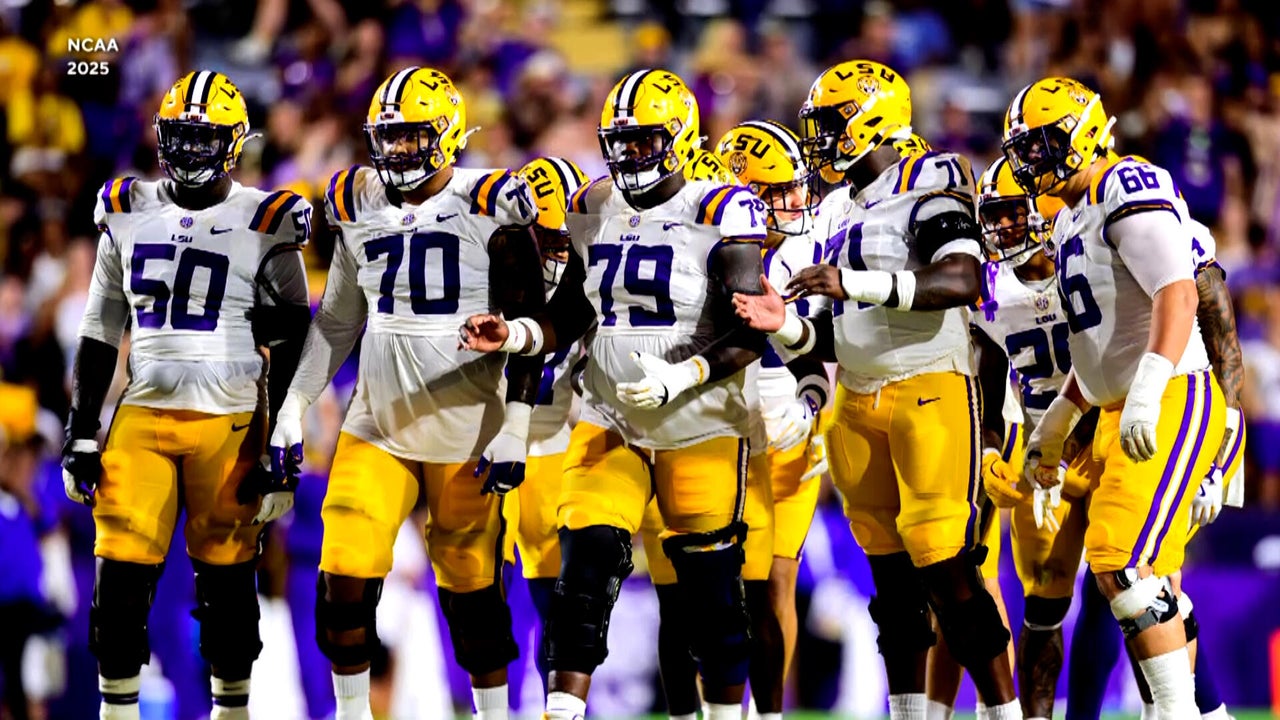
They now want another college season at LSU under Lane Kiffin.
Judge Jorden’s injunction gives them a path to be rostered while litigation continues.
And somewhere, every college backup who thought he was finally climbing the depth chart probably just checked his phone nervously.
COLLEGE FOOTBALL HAS DISCOVERED REVERSE FREE AGENCY
Imagine the possibilities.
NFL roster cuts happen.
A player gets released Tuesday.
By Wednesday, three college coaches are calling.
Thursday brings an NIL discussion.
Friday he finds an apartment near campus.
Saturday?
Welcome back to student life.
Nothing says undergraduate athletics quite like blocking a defensive end who spent August attempting to make a 53-man NFL roster.
It sounds absurd.
That is precisely why the story is so irresistible.
The SEC certainly does not find the idea charming.
The conference created rules restricting athletes who have competed professionally from returning to SEC competition and has now filed a separate federal lawsuit against LSU.
The SEC argues that its so-called professionalism rules protect competitive fairness and preserve the collegiate nature of its competitions.
Translation:
The SEC would strongly prefer its football programs not to discover that NFL cut day is another recruiting holiday.
LSU apparently sees the matter differently.
Because in modern college football, if there is a loophole somewhere between “probably illegal” and “our lawyers think we can win,” someone will eventually send Lane Kiffin the address.
OF COURSE LANE KIFFIN IS INVOLVED
Some stories simply find the correct protagonist.
Lane Kiffin challenging the traditional boundary between college and professional football feels almost too predictable.
If tomorrow somebody discovered an NCAA rule allowing quarterbacks to transfer during halftime, Kiffin would probably have three portal tabs open before the third quarter.
LSU’s pursuit of former NFL players has transformed what might have remained an abstract legal debate into something immediate.
Dae’Quan Wright and Zxavian Harris are not imaginary case studies.
They are real football players who could potentially help LSU win football games.
And winning tends to sharpen everybody’s ethical philosophy.
Clemson coach Dabo Swinney has already called the practice of bringing players back from NFL camps “embarrassing.”
Texas coach Steve Sarkisian has also questioned the impact on existing college players who could lose opportunities to returning professionals.
Their concern deserves attention.
Suppose you are a defensive lineman entering your fourth season.
You stayed.
You trained.
You attended meetings.
You survived three recruiting classes and two waves of transfers.
Finally, the starting job looks like yours.
Then your coach walks into the room with someone who was attempting to sack NFL quarterbacks three weeks earlier.
“Great news, guys. We added depth.”
Beautiful.
College loyalty has never felt more rewarding.
BUT THE NCAA’S ARGUMENT ISN’T EXACTLY BULLETPROOF
Here is where the controversy becomes genuinely difficult.
It is easy to laugh at the idea of NFL players returning to college.
It is harder to dismiss why some athletes believe they deserve that opportunity.
Players involved in the Louisiana litigation have argued that eligibility rules changed after they made major career decisions.
Some testified they might not have entered professional football when they did if they had known another college season could become available.
That creates a legitimate fairness question.
Imagine a governing body tells you:
“You have used your eligibility.”
You make an irreversible decision based on that information.
Then the governing body changes its framework.
Another athlete in a slightly different timing window receives an additional season.
You do not.
Would you simply shrug?
Or would you hire an attorney?
College athletics increasingly knows the answer.
According to reporting surrounding the case, hundreds of athletes nationwide are pursuing eligibility-related litigation.
That is not a tiny procedural disagreement anymore.
That is a system telling you through the courts that a meaningful number of participants no longer trust the rulebook to resolve disputes.
WHY PICKENS MAKES THIS DEBATE MORE INTERESTING
Pickens represents exactly the sort of player who makes the thought experiment uncomfortable.
He left college after three seasons.
His final year at Georgia had been dramatically shortened by injury.
He entered the NFL anyway.
What if today’s developing eligibility framework had existed then?
Would he have stayed another season?
Nobody can responsibly claim to know.
And there is no verified public evidence that Pickens is currently attempting to regain college eligibility.
That is not the point.
The point is that athletes like Pickens made enormous career choices when the boundary between college and professional football appeared much clearer than it does today.
The modern legal fight forces everyone to reconsider what those choices actually mean.
If going professional is no longer automatically irreversible under every possible eligibility scenario, players entering the NFL Draft now have a completely different risk calculation.
That matters.
PROFESSIONAL FOOTBALL IS NOT ALWAYS GLAMOROUS
Fans sometimes talk about entering the NFL as if every draft declaration ends with a mansion, endorsement deal and ten-year career.
Reality is much crueler.
Many players are drafted late.
Some go undrafted.
Some spend three weeks in training camp.
Some are released before appearing in a regular-season game.
Their professional careers can last shorter than a college semester.
That makes the eligibility debate complicated.
Should six weeks in an NFL facility permanently erase a college season?
Traditionalists will say yes.
The athlete chose professional football.
Choice has consequences.
Player advocates will answer that college eligibility should be determined by seasons actually competed, especially when NCAA rules themselves are changing.
Both arguments contain logic.
Which is extremely inconvenient for anyone hoping this controversy could be solved by yelling louder on television.
THE REAL FEAR: WHAT HAPPENS WHEN SCHOOLS START GAMING IT?
This is the part NCAA officials and conference commissioners should probably fear most.
Football coaches are professional rule optimizers.
Give them an inch and they will immediately ask whether the inch counts toward the salary cap.
If courts establish broader rights for former professional players to regain college eligibility, major programs will not merely accept the new reality.
They will build recruiting departments around it.
Imagine a “professional return scouting coordinator.”
Imagine college staffs evaluating NFL preseason film.
Imagine August recruiting boards containing categories like:
Released NFL players — eligibility pending.
At that point, perhaps the transfer portal needs its own airport terminal.
The richest programs could become especially aggressive.
They already have elite facilities.
Huge NIL networks.
Revenue-sharing money.
National recruiting staffs.
Now add former professional players seeking one more season?
Competitive balance becomes more complicated immediately.
The SEC’s alarm is therefore understandable.
Its solution may or may not survive court scrutiny.
But the concern is real.
SO WHAT DOES “COLLEGE ATHLETE” EVEN MEAN NOW?
That may be the most uncomfortable question produced by this entire saga.
College football increasingly resembles professional football economically.
Players can earn substantial compensation.
Coaches make millions.
Television agreements generate billions.
Roster construction looks increasingly like free agency.
Transfers happen constantly.
Contracts and collective bargaining concepts hover around almost every major discussion.
And yet traditional eligibility rules still depend partly on preserving a distinction between “college athlete” and “professional.”
That distinction is becoming harder to explain without hiring three attorneys and a PowerPoint specialist.
Perhaps Pickens’ generation sits directly in the middle of that transformation.
When Pickens played at Georgia, NIL was only beginning to reshape college sports.
When he entered the NFL, the conventional career path remained straightforward.
Just four years later, a Louisiana courtroom is debating whether players who entered NFL organizations should be permitted to return.
That is an astonishingly short timeline.
THE NCAA DIDN’T LOSE THE WAR — BUT IT LOST ANOTHER COMFORTABLE ASSUMPTION
Thursday’s ruling is a preliminary injunction.
That point cannot be ignored.
The litigation continues.
The SEC is pursuing federal relief.
Appeals could change the situation.
Different courts could reach different conclusions.
The ultimate eligibility status of individual players remains complicated.
So no, the NCAA has not suddenly become a minor-league football organization accepting NFL returns nationwide.
Not yet.
But something significant has happened.
A concept once considered almost ridiculous has entered mainstream college football.
A player can leave college.
Enter professional football.
Be released.
Then ask a court for the right to return.
And the court might say yes.
That alone changes the conversation.
THE QUESTION THE NCAA MAY NOT WANT TO ANSWER
George Pickens left Georgia, entered the NFL Draft and never looked back.
That was the accepted order of things.
College.
NFL.
Forward.
The Louisiana ruling challenges the assumption that every athlete must follow that same irreversible path.
Critics see chaos.
Athlete advocates see fairness.
The SEC sees a threat to competitive balance.
LSU sees players who might help win football games.
Lawyers see billable hours.
Lane Kiffin probably sees a depth chart.
And fans?
Fans are left asking the question nobody expected to become serious:
If a player can transfer between colleges, earn substantial money through modern college athletics, enter professional football and still possess unused competitive seasons, why must one brief NFL stop automatically end everything?
There is no clean answer.
That is exactly why this fight is getting bigger.
The NCAA once controlled eligibility through a rulebook.
Now judges are increasingly joining the officiating crew.
And if courts continue pushing open the door Louisiana just cracked?
College football might soon learn that the road to the NFL is no longer necessarily one-way.
It may have an exit ramp—
and a U-turn.


