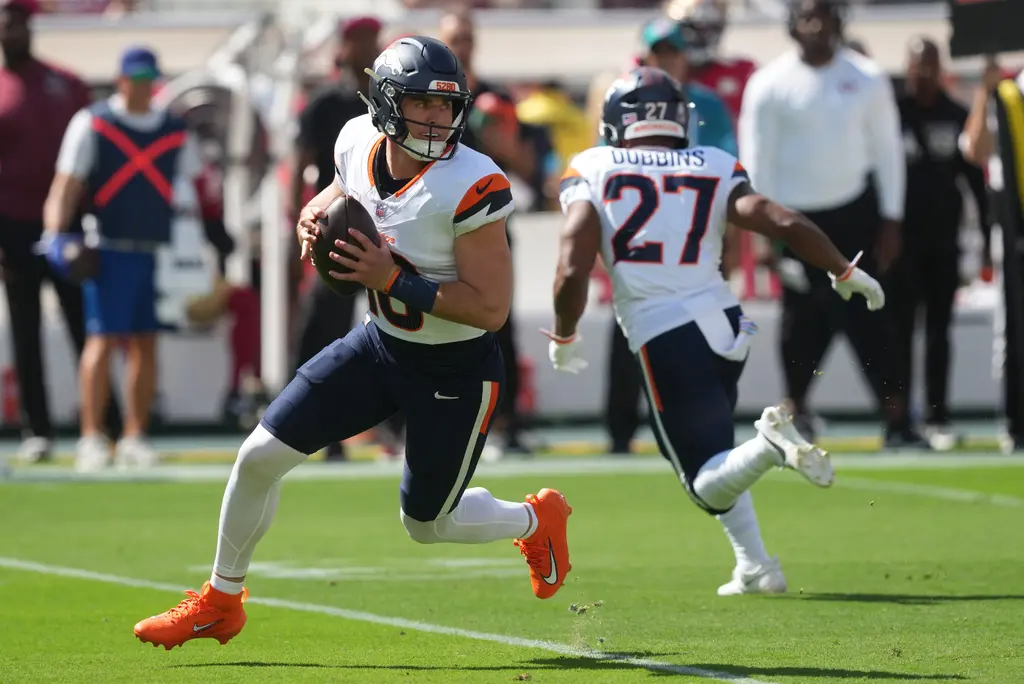
A dramatic claim spreading around NFL social media says Bo Nix strongly responded after criticism from the San Francisco side following Denver’s 24–14 loss, but the most important detail is also the one getting overlooked: no verified report currently shows 49ers management publicly attacking his character or personal conduct.

What is confirmed is that San Francisco moved to 4–0 with a bruising victory over Denver, while Nix finished with 214 passing yards and one touchdown as the Broncos struggled to create explosive plays against a disciplined 49ers defense that controlled the second half.
The criticism surrounding Nix has nevertheless become intense, especially after analysts and 49ers-focused media questioned Denver’s conservative passing approach, his limited success downfield, and whether the Broncos’ offensive structure is showing enough trust in its young quarterback when games become uncomfortable.
That distinction matters because criticism from reporters, analysts, or fan accounts is very different from an official statement by executives, coaches, or team management, yet social media can quickly erase those boundaries and transform a harsh football opinion into something that sounds like an organizational attack.
Nix’s actual postgame comments also created discussion, although not because he launched a direct verbal attack at San Francisco, since he instead expressed confidence in offensive coordinator Davis Webb and argued that Denver’s players must execute better and make life easier for the young play-caller.
He was also asked whether lingering swelling and stiffness in his surgically repaired ankle had influenced his willingness to run, and his answer was simple and firm, rejecting that explanation while presenting himself as healthy enough to play without hiding behind a physical excuse.
That response may not be the explosive confrontation some viral posts are promising, but it arguably says something more interesting about Nix, because he appears unwilling to let criticism turn into public blame even as questions grow about Denver’s passing design, decision-making, and offensive identity.
For Broncos fans, that restraint can be interpreted as leadership, especially when a quarterback accepts the pressure that comes with a frustrating loss, but others may see it differently and wonder whether Denver needs more visible urgency from the player expected to define the franchise’s future.
The debate becomes even sharper when the numbers are considered, because one widely circulated postgame analysis noted how rarely Denver attacked successfully beyond ten yards, fueling the growing belief that defenses may be squeezing the Broncos because they do not fear consistent vertical punishment.
That does not automatically mean Nix is the problem, because protection, receiver separation, play design, down-and-distance situations, and coaching philosophy all shape a quarterback’s options, yet the public conversation inevitably centers on the player who touches the football on nearly every offensive snap.
San Francisco’s defense deserves significant credit as well, because the 49ers limited Denver to fourteen points and prevented the Broncos from finding the explosive rhythm that had helped them survive difficult moments earlier this season, turning every short completion into another source of frustration.
The uncomfortable question for Denver is therefore bigger than whether Nix “fired back” at somebody after the game, because the real controversy is whether the Broncos are temporarily struggling against elite competition or revealing a deeper limitation that opponents can repeatedly exploit.
For San Francisco supporters, the result offers another reason to believe their undefeated start is legitimate, while Denver supporters are left arguing over whether criticism of Nix has gone too far, whether the coaching staff deserves more blame, and whether patience is becoming increasingly difficult.
That tension is exactly why an unverified story about a confrontation can spread so quickly, because it gives both fan bases a simple villain-and-hero storyline, even when the documented reality is more complicated, less dramatic, and ultimately more meaningful for the season ahead.
Until a credible report produces direct comments from 49ers management criticizing Nix’s personal conduct, or a verified response from Nix addressing such remarks, presenting that exchange as confirmed would go beyond the available evidence and turn speculation into something readers could mistake for fact.
The real story is already controversial enough: Denver lost 24–14, Nix faced renewed questions about the offense, San Francisco remained unbeaten, and the Broncos now enter their next game carrying a debate that could become much louder if their downfield attack fails to improve.
So the question dividing fans should not be whether Bo Nix won an imaginary war of words, but whether his calm public response represents the confidence of a quarterback building toward something bigger, or the calm before Denver is forced to make uncomfortable offensive changes.


